
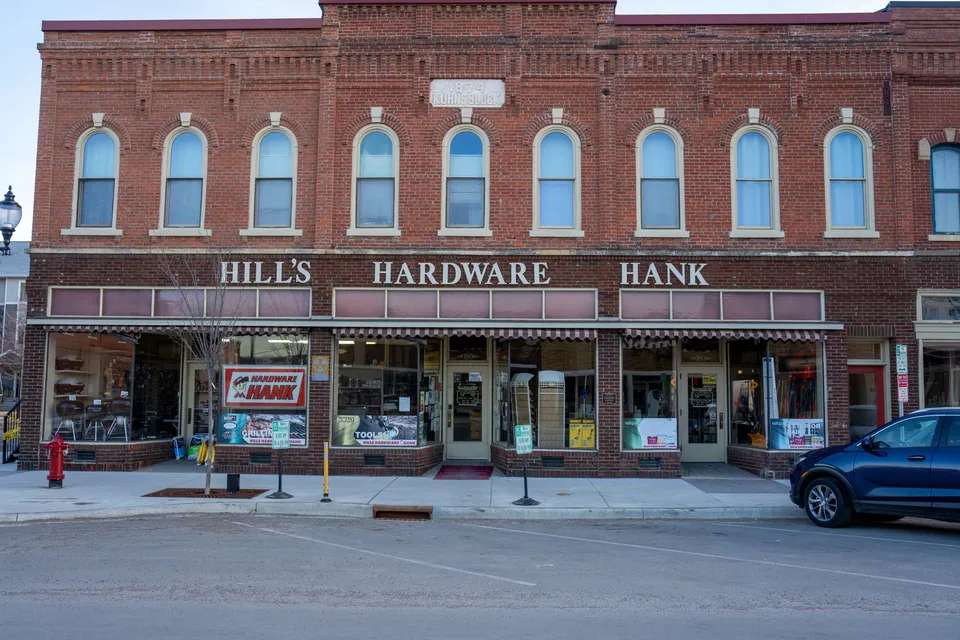
Park Rapids is easier to understand once you stop looking for one center and start noticing the handoffs. A resident might call the city for one question, the county for another, KRLS for library access, and Heartland Express for a ride across town or out to Bemidji. That pattern is not a flaw in local life; it is part of how the area works. The city website routes people toward regional library and school information rather than treating every service as a standalone city department, and Heartland Express says it offers curb-to-curb service in Park Rapids and Bemidji. In a county seat surrounded by lakes, townships, and smaller communities, that kind of shared system matters as much as any single building.
A town built on connections
Park Rapids sits in Hubbard County as a practical hub, not an isolated dot. The county seat role shaped the city early, and the courthouse still anchors the civic landscape. A National Register record traces the county’s seat decision to 1883 and notes that the courthouse built in 1900 remained county headquarters until the mid-1970s. The Park Rapids Enterprise also has a long run in local memory, with the Minnesota Historical Society showing a publication history that begins in 1882, changes names in the 1880s, and resumes as the Park Rapids Enterprise in 1954. Those facts help explain why the town feels organized around institutions that have had time to settle in.
That institutional backbone shows up in everyday services. Park Rapids operates water, sewer, police, fire, planning, parks, and airport functions through municipal departments, and the city’s water and sewer pages list 1,370 water connections, 1,270 sewer connections, two water towers, five wells, and 16 lift stations. Those numbers do not make headlines, but they explain why city lots, older neighborhoods, and nearby rural properties can feel so different from one another. They also show that Park Rapids is not just a visitor stop; it is a place where people live with year-round infrastructure.
Where the trail, river, and park system overlap
The clearest example of Park Rapids’ “connected” geography is the river corridor. Red Bridge Park sits on Beach Road, covers one acre, connects by the red bridge to Heartland Park, and serves as a trailhead for the Heartland Trail. That makes it more than a pretty green space. It is a crossing point between walking, fishing, trail use, and neighborhood life. In a small city, that matters because the same place can serve a family picnic, a commute on foot, and a route into the wider recreation network.
The larger recreation picture is just as practical. Hubbard County maintains public boat accesses and beaches at places such as Stony Lake, the Fish Hook River at Heartland Park, Garfield Lake near Laporte, and Paine Lake at Lake George Community Park. The chamber’s outdoor materials place Park Rapids in a wider trail-and-forest system that includes the Heartland Trail, the Lake Country Scenic Byway, the Crow Wing River State Water Trail, and Itasca State Park as a regional anchor rather than a neighborhood park. The useful takeaway is that recreation here is distributed. You do not need one giant destination to make a good day outside; the local landscape offers many smaller doors into the same outdoors.
That distribution is part of why Park Rapids feels larger than its population suggests. A person can move from downtown to a trailhead, from a county beach to a lake access, and from a city park to a regional route without ever leaving the local rhythm of the place. The city is not trying to compete with a metro network; it is offering a set of short, useful links between the things people actually do.
What newcomers notice fastest
For someone arriving in Park Rapids, the first surprise is often how many ordinary tasks are handled through a shared regional setup. The city website sends residents toward KRLS for library access, and the school district’s career-and-college readiness page points students toward tools such as CAREERwise and YouScience while offering finance classes, job-shadow opportunities, interest assessments, field trips, and school tours. The district also lists preschool and early-childhood services through Early Childhood Family Education, School Readiness, Head Start, and Early Childhood Special Education at the Frank White Education Center. That tells families something important: school and community support are woven together here, not split into disconnected silos.
Housing and land use follow the same logic. The city’s rental pages show a formal system with rental licenses, inspection checklists, safety guidelines, a rental ordinance brochure, and a separate short-term rental process. The planning FAQ also says a development plan review generally takes about 60–90 days, home occupations often take 30–60 days to review, and building and plumbing permits are required for nearly any construction or remodeling project. For a newcomer, that means the local question is not just “Can I find a place?” It is also “What kind of place is it, and what rules shape it?”
Transportation is another place where expectations need to match local reality. Heartland Express says it provides safe, reliable transportation for Hubbard County residents, offers curb-to-curb bus service to Park Rapids and Bemidji, and can get riders around the City of Park Rapids. That is a genuine mobility option, but it is still a service that people need to plan around. In a region where not every errand is on the same block, knowing the route system is part of knowing the town.
The part of Park Rapids that lasts
Park Rapids has changed many times, but it keeps coming back to the same practical idea: civic life works best when the pieces are linked. The courthouse, school district, transit, parks, airport, utilities, and regional services all reinforce one another. The city airport even shows that in small ways, with 44 T-hangars available for rent and a second-floor terminal meeting room listed for public use. That does not make Park Rapids a big city. It makes it a place that knows how to serve people who need to move, meet, work, and gather without wasting time.
The most useful way to think about Park Rapids, then, is not as a single destination but as a working network of places that help one another function. Downtown does not stand alone. The parks do not stand alone. The schools, transit, courthouse, airport, and utility systems do not stand alone. They form the everyday structure that makes the city feel legible once you live here long enough to use it. If you are new in town, start by learning those links; they will tell you more about Park Rapids than any postcard ever could.
Next step: if you are settling in, planning a project, or just trying to get oriented, begin with the city’s planning and rental pages and the county transportation site. In Park Rapids, the fastest way to feel at home is to understand how the pieces connect.