
Park Rapids can look self-contained from a highway map, but everyday life here works more like a relay. The city website points residents to KRLS for library access rather than treating the library as a city department, and the county transit system says Heartland Express can carry riders around Park Rapids and on to Bemidji. Even recreation follows that pattern: Red Bridge Park is only one acre, yet it links directly to Heartland Park and serves as a trailhead for the Heartland Trail. Those details add up to a simple but important idea: in Park Rapids, the useful question is not just what is inside town limits, but what the town is connected to.
A town center that works because it reaches outward
That shared-service model shows up in ordinary places first. When a city routes people to a regional library system, it is signaling that learning and reference services are part of a broader network, not a single building on one city block. The same logic appears in community education and school information, which the city links alongside other public services. In practical terms, Park Rapids residents do not have to pretend every need has to be met inside one office or one street. They can use city, county, and regional systems together.
Transportation makes that network feel real. Heartland Express describes itself as a safe, reliable ride option for Hubbard County residents and says it offers curb-to-curb bus service to Park Rapids and Bemidji, with service around the City of Park Rapids as well. That does not mean every schedule or every workplace is automatically covered, but it does mean the region has a mobility backbone that many small towns do not. For residents who need appointments, shopping, classes, or support services, that can make the difference between a manageable day and a difficult one.
The river corridor is more than a pretty edge
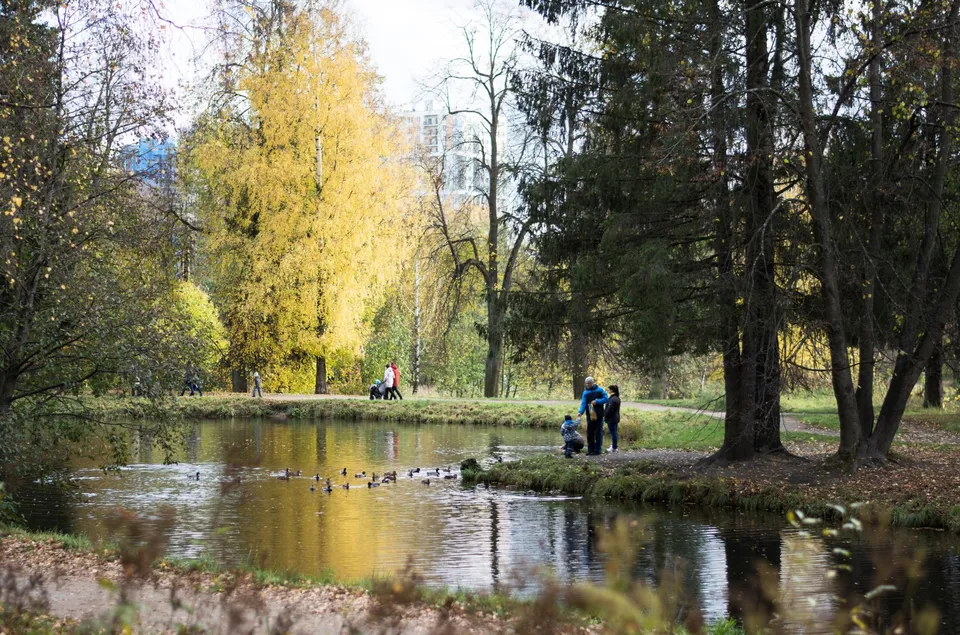
Red Bridge Park is easy to underestimate because it is small. The city describes it as a one-acre park on Beach Road, but it also says the park connects by the red bridge to Heartland Park and functions as a trailhead for the Heartland Trail. That means the river corridor is not just a place to stop and look around; it is one of the points where Park Rapids becomes a route. People enter the trail system there, cross between recreation spaces there, and gather there for the kind of everyday events that make a town feel shared instead of segmented.
The bigger pattern matters too. Hubbard County’s parks system maintains public boat accesses and beaches at several locations, including Stony Lake, the Fish Hook River at Heartland Park in Park Rapids, Garfield Lake near Laporte, and Paine Lake at Lake George Community Park. That distribution tells residents and visitors something useful: recreation in the Heartland Lakes area is not concentrated in one iconic destination. It is spread across a set of access points that support fishing, swimming, boating, and family outings in different parts of the county.
For visitors, that means Park Rapids is not just a gateway to outdoor space. For residents, it means the outdoors is woven into daily geography. A quick errand, a trail walk, a boat launch, and a downtown stop can all belong to the same route if you know how the pieces fit together. That is a more accurate picture of the town than any postcard view.
Families and newcomers meet the practical side of town fast
The school district is another reminder that Park Rapids works through layered services. Park Rapids Area Schools says it offers a comprehensive PK–12 curriculum, technology integration, and preschool services through Early Childhood Family Education, School Readiness, Head Start, and Early Childhood Special Education at the Frank White Education Center. It also points students toward career-readiness tools such as job shadowing, interest assessments, and career exploration resources. For families, that means school is not just a classroom network; it is part of how the community introduces children and teens to future options.
Housing is equally practical. The city’s rental forms page shows that rental housing is regulated through licensing, inspection checklists, safety guidelines, and short-term rental forms. The planning office also says development plan review generally takes about 60–90 days and home occupations often take 30–60 days to review. Those are not abstract bureaucratic facts; they tell newcomers, landlords, and home-based business owners how long local decisions can take and why a place to live is not the same thing as a place to rent for the season.
That distinction matters in a county where the housing pattern is heavily owner-occupied and where vacation use can blur the market. If you are relocating, the main lesson is to separate stable year-round housing from short-term or seasonal lodging before you make assumptions about availability. Park Rapids has the rules to manage both, but the two are not interchangeable.
Why Park Rapids feels bigger than it looks
The town’s civic center helps explain its staying power. Park Rapids is the county seat, and the courthouse remains a major civic site. The area also has a long documentary memory through the Park Rapids Enterprise, which has published in one form or another since the 1880s. Add the Hubbard County Historical Museum on Court Avenue, and you get a town that does not just host services; it keeps records of itself. That is one reason Park Rapids can feel both practical and rooted at the same time.
Downtown reinforces that sense of civic life. Chamber materials describe a historic main-street atmosphere, food and beverage options, festivals, and recurring programming such as the 2nd Street Stage. Downtown is therefore not only a shopping district; it is where public memory, local business, and community events overlap. In a small city, that overlap matters because it gives residents a place to be seen, to meet, and to keep up with what is changing.
If you want one practical next step, start with the city’s parks page and the county transit information, then trace how Red Bridge Park, KRLS, and Heartland Express connect the places you already use. In Park Rapids, the map makes the most sense when you read it as a set of working connections.