
Park Rapids is easy to underestimate if you only look at the county seat on a map. The more useful picture is what happens when a person tries to live there for a day: get across town, reach the trail, find a ride, deal with a rental, or use a public service without driving half the county to do it. In Park Rapids, those ordinary tasks are shaped by a set of practical systems that connect downtown, the river corridor, county recreation, and city services into one working place.
The river corridor is more than scenery
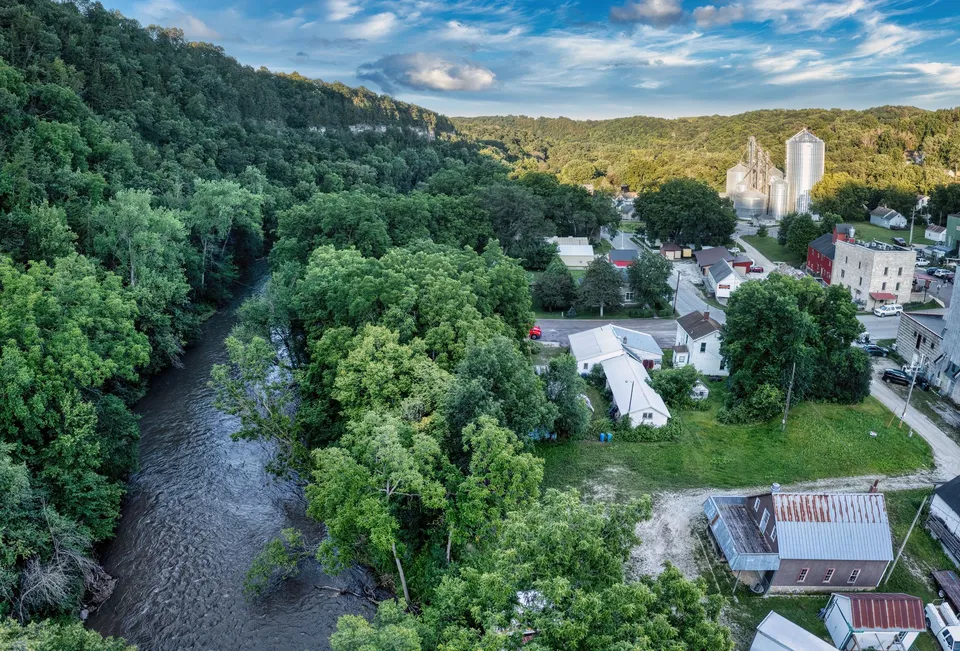
One of the clearest examples is Red Bridge Park. The city describes it as a one-acre park on Beach Road that connects by the red bridge to Heartland Park and serves as a trailhead for the Heartland Trail. That is a small detail with a big meaning: the Fish Hook River is not just a backdrop here. It is part of the route people use to walk, fish, gather, and enter a regional trail system. In other words, the river corridor is both a place and a path.
That connected geography continues beyond city limits. Hubbard County says it maintains public boat accesses and beaches at Stony Lake, the Fish Hook River at Heartland Park, Garfield Lake near Laporte, and Paine Lake at Lake George Community Park. For residents and visitors, that means the area’s recreation network is spread across city parks, county access points, and nearby communities rather than concentrated in a single park district. It also explains why Park Rapids feels larger than its population suggests: everyday life extends along water, trail, and road connections that cross municipal lines.
Mobility is a real service, not an assumption
Park Rapids also works because transportation is treated as a service, not just an individual problem. Heartland Express says it provides curb-to-curb bus service to Park Rapids and Bemidji and can get riders around the City of Park Rapids. The same service says it works with veterans services, community education, the Development Achievement Center, social services, Medicaid, and others. That tells you something important about the local economy of access: in Hubbard County, a trip is often part of getting to work, an appointment, or another agency—not just a ride across town.
The caution is just as important as the convenience. County transit exists, but the report is careful not to treat it like magic coverage for every shift or every jobsite. Riders still need to confirm schedules, booking rules, and stop coverage before depending on it. That distinction matters for employers, newcomers, and anyone trying to compare Park Rapids with a denser town where a car-free day may be more predictable.
Small-city infrastructure does a lot of work here
Park Rapids’ airport is another sign that the city serves more than one purpose at once. The municipal airport page says it has 44 T-hangars available for rent and a second-floor terminal meeting room available for $60 for a full day or $40 for a half day. That does not make the airport a major hub, but it does show that the facility is useful as both transportation infrastructure and a modest community/commercial space. In a small city, that kind of overlap matters.
The same is true of utilities. Park Rapids reports 1,370 municipal water connections, 1,270 sewer connections, two water towers, five wells, and 16 lift stations, along with wellhead-protection planning. Those figures are easy to overlook, but they explain why some parts of Park Rapids can support year-round homes, businesses, and civic functions while other nearby places rely on different service patterns. If you are comparing a city lot with a rural parcel or a lake property, the utility network is part of the real decision.
Housing and home occupations follow local rules
Newcomers often ask what it takes to move in, rent, or open a small operation from home. Park Rapids answers those questions with forms and review periods, not guesswork. The city’s rental document center includes a rental license application, inspection checklist, rental safety guidelines, a rental ordinance brochure, a short-term rental application, and a lodging-tax remittance form. That shows rentals are regulated locally rather than treated as a free-for-all, and it also shows that short-term lodging is handled differently from ordinary housing.
The planning page adds another useful reality check: a development plan review generally takes about 60–90 days, and home occupations in most residential districts often take 30–60 days to review with a conditional-use permit. For a resident, that is the kind of timeline that matters when you are thinking about a garage project, a home office, or a small business that starts at your kitchen table. Park Rapids is not just a place where things happen; it is a place where things are reviewed, permitted, and fitted into a county-seat system.
Why this matters for everyday life
Taken together, these facts describe a community that works through connections: trail to park, park to river, city to county, and road to service. That is why Park Rapids can feel both compact and surprisingly complete. You can see the courthouse and downtown as civic anchors, but the better story is how the public pieces fit together—parks, transit, utilities, rental rules, and regional recreation. Even the school district and regional education links fit that pattern of shared systems rather than isolated institutions.
If you are planning a move, a longer visit, or a small business idea in Park Rapids, start with the practical pieces: the city’s rental forms, the planning page, and Heartland Express. Those three resources tell you a lot about how daily life actually runs here.