
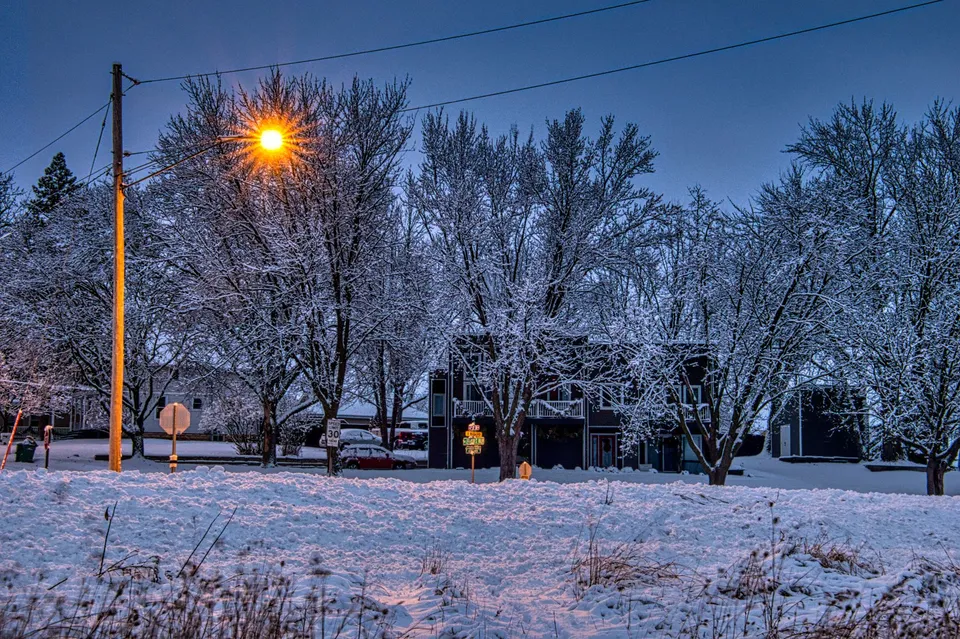
Park Rapids is often introduced through lakes, trails, and a Main Street full of familiar small-town energy, but the more revealing story is the set of systems that make the place work all year. As Hubbard County’s seat, Park Rapids centers county government, a courthouse complex, and city services that include the airport, water, sewer, parks, and planning functions. Those are the things people notice most when they need them, not when they are simply passing through town.
Transportation is part of daily life, not just a convenience
One of the clearest examples is Heartland Express. The county transit service says it provides safe, reliable transportation for Hubbard County residents, offers curb-to-curb bus service to Park Rapids and Bemidji, and can get riders around the City of Park Rapids. That matters because transportation here is not only about recreation or tourism. It is also about getting to appointments, shopping, services, and work. The practical catch is that riders still need to check schedules, booking rules, and stop coverage before relying on a bus for a specific shift or errand.
The airport plays a quieter but still important role. Park Rapids Municipal Airport says it has 44 T-hangars available for rent and a second-floor terminal meeting room that can be reserved for a half day or a full day. That tells you the airport is not just an aviation facility; it is also a small civic asset that serves pilots, visitors, and local users who need a meeting space. In a county like Hubbard, those kinds of shared facilities matter because they give a small city some of the same logistical flexibility you would expect in a much larger place.
The housing question starts with rules, not guesses
For newcomers, Park Rapids’ housing picture is shaped by regulation as much as by supply. The city’s rental documents include a rental license application, inspection checklist, safety guidelines, short-term rental paperwork, and a rental ordinance brochure. The city planning page also says a development plan review generally takes about 60 to 90 days, while home occupations in many residential districts often require a conditional-use permit and a 30- to 60-day review window. Building and plumbing permits are required for nearly any construction or remodeling project. In other words, if you are thinking about moving here, renting here, or starting a home-based business here, paperwork is part of the first conversation.
That regulatory structure makes more sense when you remember what the countywide housing pattern looks like. Hubbard County is heavily owner-occupied, and the research notes that many properties in the area are seasonal or lake-oriented rather than year-round housing. That is why a vacation cabin, an employee rental, and a permanent home should never be treated as interchangeable. For anyone relocating, the lesson is simple: verify the exact use, season, and rules before assuming a place will work for full-time living.
Learning in Park Rapids is more networked than isolated
The school district is another sign that Park Rapids runs on connected systems. Park Rapids Area Schools says students can access career-and-college readiness tools such as finance classes, job shadows, interest assessments, the ASVAB, field trips, YouScience, and CAREERwise. The district also describes preschool and early learning through Early Childhood Family Education, School Readiness, Head Start, and Early Childhood Special Education at the Frank White Education Center. That means the local pipeline from childhood to work starts early and is more layered than a simple K-12 classroom model.
Informal learning follows a similar pattern. The city website routes residents to KRLS rather than presenting the library as a city department, which is a small but telling example of how services in Park Rapids are often shared regionally. It is the same logic that shows up in transit, county services, and education: the city is important, but it is part of a wider network rather than a sealed-off island.
Why this matters to people who live here now
Park Rapids also has a strong sense of continuity. The Minnesota Historical Society records the Park Rapids Enterprise as a newspaper that began in 1882, resumed in 1954 under its current name, and is still publishing. The courthouse remains a prominent county landmark, and the Hubbard County Historical Museum at 301 Court Avenue helps preserve that civic memory. Those institutions matter because they show Park Rapids as a place that has been building and maintaining public life for a long time, not just hosting seasonal visitors.
That may be the best way to understand the town: Park Rapids feels small, but it is not simple. It has transit, utilities, planning rules, a school pipeline, an airport, and county government layered into everyday life. Those systems do not always get the spotlight, yet they are what make the city workable for residents, newcomers, employers, and anyone trying to stay here beyond a single weekend.
If you are planning a move, a rental, or a commute, the most useful next step is to check the city’s rental forms and planning information alongside Heartland Express rider details before you make assumptions about housing or transportation.