
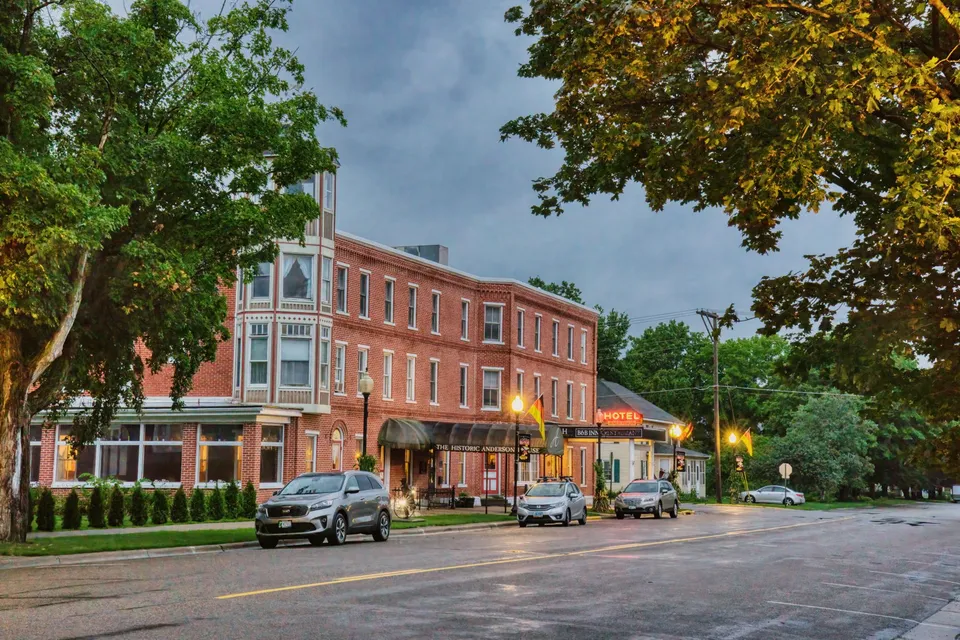
Park Rapids can look compact from the outside, but daily life here in the Heartland Lakes area rarely stays inside one neat block of city limits. The city is the county seat, the local website routes residents to KRLS instead of presenting a city-run library, and county planning and transportation tie Park Rapids together with Akeley, Laporte, and Nevis. That makes the real story of the town less about one address than about a network of places and services.
Downtown is civic ground, not just retail space
Downtown Park Rapids is still where commerce and community overlap. The chamber’s materials describe a historic main-street feel, downtown shopping, food and beverage options, festivals, and recurring programming such as 2nd Street Stage. That matters because downtown is not just where people spend money; it is where they meet, hear music, run errands, and keep a shared calendar. The county seat status adds another layer: Park Rapids has long carried the civic weight of being the hub for local government, and the courthouse remains part of that identity.
The town’s public memory is unusually durable for a place this size. The county was organized in 1883, the county seat was fixed at Park Rapids in the first meeting of county commissioners, and the historic courthouse built in 1900 still stands as a landmark of that early decision. The local newspaper record is also long-running, with the Park Rapids Enterprise tracing back to the 1880s and continuing today. Those details help explain why local debates here often feel both practical and personal: people are not just managing a town, they are tending an inherited civic center.
The river corridor is a route, not a backdrop
One of the clearest examples of Park Rapids’ connected geography is Red Bridge Park. The city says the park sits on Beach Road, covers one acre, connects by the red bridge to Heartland Park, and serves as a trailhead for the Heartland Trail. That means the Fish Hook River corridor is both a place to linger and a way to move through town. It is where someone might stop to fish, watch a gathering, or start a ride, rather than a scenic edge that people merely look at from a distance.
That same pattern extends beyond the city line. Hubbard County’s parks page says it maintains public boat accesses and beaches at places including the Fish Hook River at Heartland Park and Garfield Lake near Laporte. In other words, the everyday outdoor map is not confined to one park or one municipality. Residents and visitors move from downtown to the river to county recreation sites as part of normal life, not as a special expedition.
Getting around is a regional question
Park Rapids also depends on systems that are bigger than the city itself. Heartland Express says it provides safe, reliable transportation for Hubbard County residents, offers curb-to-curb bus service to Park Rapids and Bemidji, and can get riders around the city. It also works with Veterans Services, Community Education, the Development Achievement Center, Social Services, Medicaid, and others. That tells you transportation here is not a luxury feature; it is part of how people reach appointments, services, and obligations.
The airport is part of that practical network too. The Park Rapids Municipal Airport says it has 44 T-hangars available for rent and a second-floor terminal meeting room available by the day. That is a small detail with a big meaning: the airport is not only for arrivals and departures, but also a modest shared facility that supports the town’s everyday rhythm.
Housing and land use follow the same logic. The city’s rental documents include a rental license application, inspection checklist, safety guidelines, a short-term rental application, and a lodging tax remittance form. The planning FAQ adds that development plan reviews generally take about 60 to 90 days, home occupations often take 30 to 60 days to review, and building and plumbing permits are required for nearly any construction or remodeling project. For newcomers, those are not bureaucratic footnotes; they are the real timeline for moving in, opening something small, or changing a property.
Park Rapids’ utility footprint also helps explain why the city feels distinct from surrounding rural and lake property. The water system reports 1,370 municipal connections, two water towers, and five wells, while the sewer system reports 1,270 connections and 16 lift stations. Those numbers are reminders that the city supports a dense enough core to sustain municipal service year-round, even though the larger county still depends on scattered homes, resorts, and rural roads.
Families and students see the same network
The school district shows another side of this connected town. Park Rapids Area Schools says students can access finance classes, the ASVAB, job-shadow opportunities, field trips, interest assessments, clubs or sports, school tours, and tools like CAREERwise and YouScience. The district also points families to preschool and early childhood options, including Early Childhood Family Education, School Readiness, Head Start, and Early Childhood Special Education at the Frank White Education Center. That is a real support system, not just a slogan about opportunity.
This matters because a small town can be easy to misread. If you only count storefronts, Park Rapids looks like a classic main street. If you only count trailheads, it looks like a recreation stop. If you only count county offices, it looks like a government town. The better reading is that all of those identities operate at once. Park Rapids is a place where the courthouse, the trail, the bus route, the school district, the downtown calendar, and the housing rules all shape one another.
For residents, that means convenience often depends on knowing which system does what. For visitors, it means a quick stop can turn into a fuller look at the river corridor, downtown, or the trail network. For newcomers, it means the practical questions are usually regional ones: Where do I park? How do I get around? Which office handles the permit? Which service is countywide? The city has answers, but not all of them live in the same building.
A good next step is simple: before you assume Park Rapids is only one thing, check the city planning pages, the Heartland Express service information, and the downtown calendar. The real Park Rapids map is wider than its main street, and that is exactly what makes it interesting.