
Park Rapids feels compact when you are on Main Avenue, but the town only makes sense when you notice how much of daily life depends on systems that stretch beyond one block. The city runs an airport, a transit connection, water and sewer networks, and a planning process that shapes how homes and small businesses can actually function. That is why Park Rapids can look like a small town and behave like a regional hub at the same time.
Reach in a place built on distance
For residents, newcomers, and visitors, the real question is often not “Where is Park Rapids?” but “How do I get there, get around, and get things done once I arrive?” In Hubbard County, that question matters because the city sits inside a broader web that includes Akeley, Laporte, and Nevis, which are all part of the county’s shared hazard-mitigation planning. That detail may sound technical, but it shows something practical: Park Rapids is not an island. It is one node in a county that expects people, services, and responsibilities to cross municipal lines.
The same pattern shows up in transportation. Heartland Express says it provides curb-to-curb bus service to Park Rapids and Bemidji and can get riders around the City of Park Rapids. It also says it works with Veterans Services, Community Education, Social Services, Medicaid, and other partners. That makes it more than a courtesy ride; it is part of the area’s everyday mobility system. For someone without a second vehicle, for an older adult, or for a family juggling appointments, that kind of service can decide whether a day feels manageable or impossible.
The airport is smaller than it looks, but more useful than a casual glance suggests
Park Rapids Municipal Airport is a good example of how a small facility can carry more civic weight than its footprint suggests. The city says the airport has 44 T-hangars available for rent and a second-floor terminal meeting room that can also be reserved for community use. Those details matter because they show the airport is not only a place for aircraft; it is a maintained local asset with a business side and a public side.
That matters to the town’s identity. A community airport helps make Park Rapids feel reachable for pilots, seasonal property owners, small-business travelers, and people who rely on short regional trips. It also gives the city another kind of flexibility: a place where transportation, meetings, and local activity can overlap without needing a large metropolitan facility. In a county where distances are measured against lakes, two-lane roads, and rural addresses, that is not a minor feature. It is part of how the area stays connected.
Utilities are the unseen part of “close”
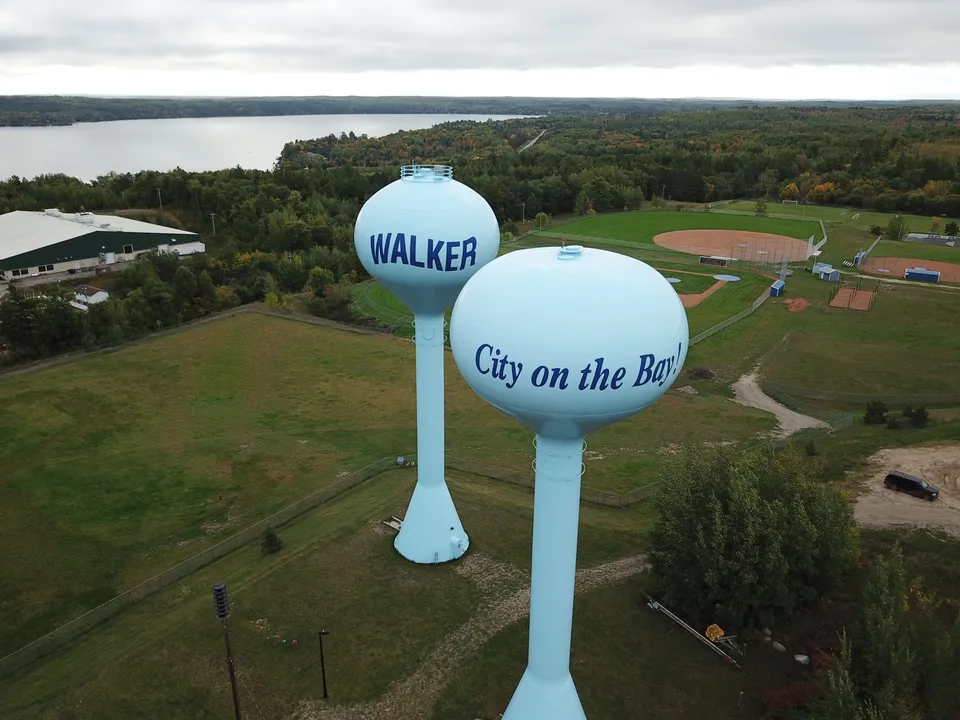
A place can feel friendly and still be hard to live in if the basics are shaky. Park Rapids avoids that trap by maintaining a substantial municipal utility network. The city reports 1,370 water connections, 1,270 sewer connections, two water towers, five wells, and 16 lift stations. Those numbers do not make for flashy tourism copy, but they tell residents something more important: the city is built to support year-round households, not just summer traffic.
That utility footprint also helps explain why city lots, rural homes, and lake properties can feel like different worlds even when they share the same ZIP code. A home connected to municipal systems has a different operating reality than a cabin on a private system or a property that depends on a long rural driveway and separate services. For newcomers comparing options, that is not a small distinction. It affects maintenance, remodeling, and the actual cost of living comfortably in the area.
The rules behind a move, remodel, or home-based business
Park Rapids also makes clear that housing and land use are regulated, not assumed. The city’s Rental Forms and Information page includes a rental license application, inspection checklist, rental safety guidelines, a short-term rental application, and a short-term rental lodging tax remittance form. The city’s planning FAQ says a development plan review generally takes about 60–90 days, while home occupations in most residential districts often take 30–60 days to review.
Those details are useful because they turn abstract advice into a calendar. If you are moving to Park Rapids, opening a small operation from home, or changing a property’s use, the real question is not whether the idea sounds simple. It is whether the property fits the city’s process. In a town with a lot of seasonal housing pressure and a strong mix of residential, visitor, and business uses, that process protects both neighbors and the people trying to make plans.
The trail and river corridor show how recreation and movement overlap
Park Rapids does not only connect people through roads and public services. It also does it through parks and trail access. The city’s Red Bridge Park page says the park sits on Beach Road, covers one acre, connects by the red bridge to Heartland Park, and serves as a trailhead for the Heartland Trail. That means a park is also a passage point. People fish there, walk there, meet there, and begin longer trips from there.
The Heartland Trail strengthens that idea. County material says the trail starts in Park Rapids and extends to Cass Lake, and the regional trail network is described as a major corridor rather than a neighborhood path. Put simply, the town’s recreation geography is also its transportation geography. A river corridor that begins as a park can become the first step in a much larger regional route.
That is one reason Park Rapids works so well as a county seat. It is not just the place where services are located; it is a place where services, mobility, and recreation meet in visible form. Downtown events, the airport, transit, parks, and utilities all support the same basic idea: in a spread-out county, being reachable is a civic achievement. Park Rapids has built itself around that reality.
If you are new to the area, a good next step is to compare the city’s planning pages with its rental and utility information before you decide what a property or commute really means in practice.